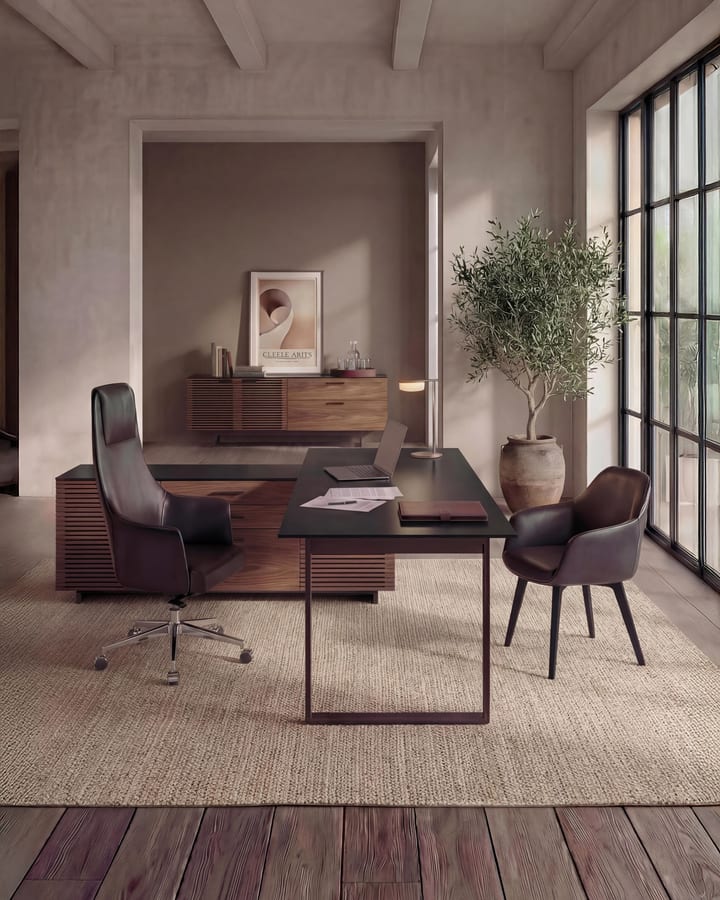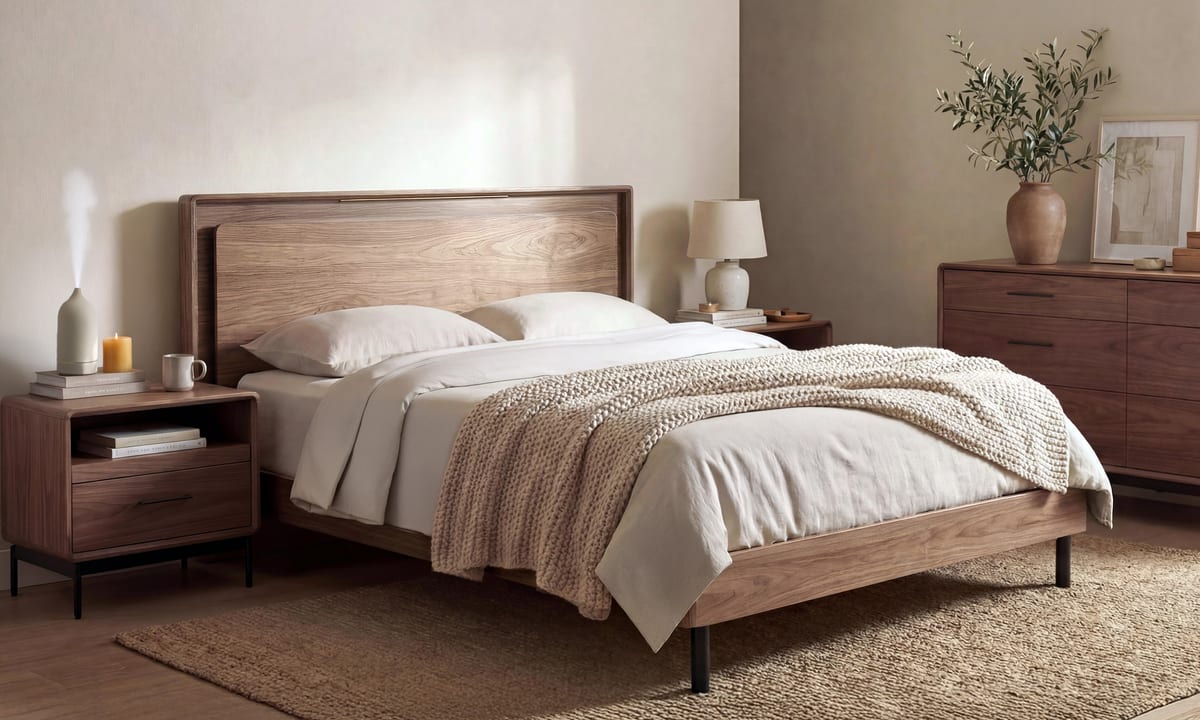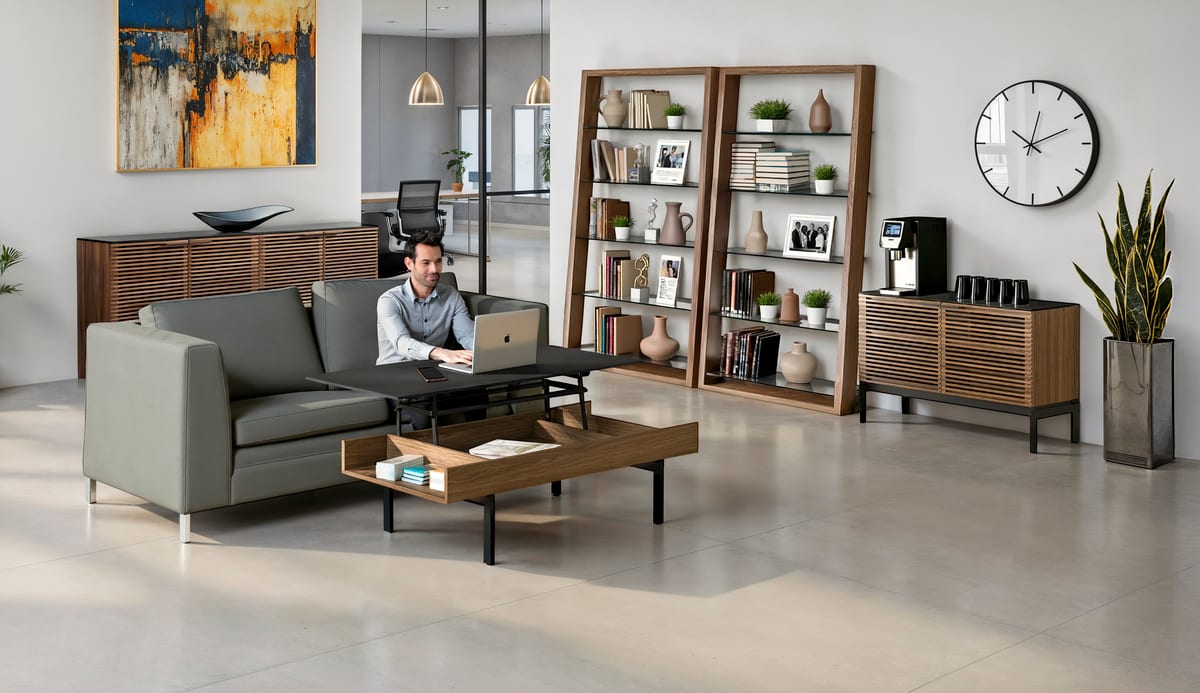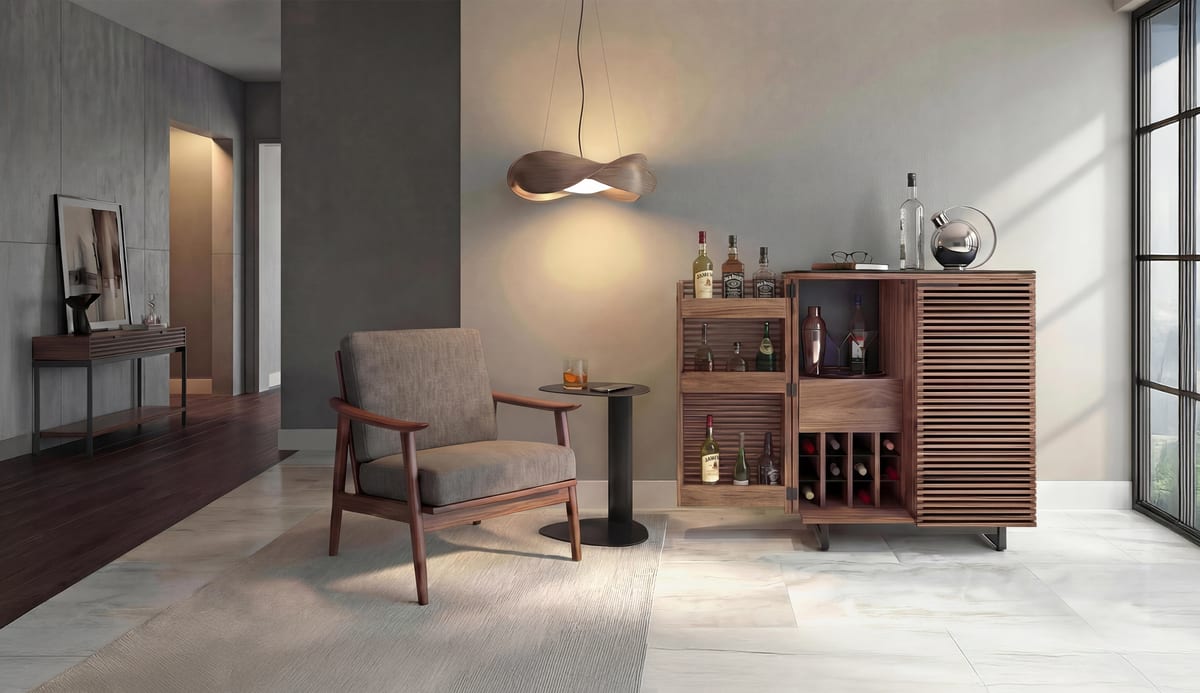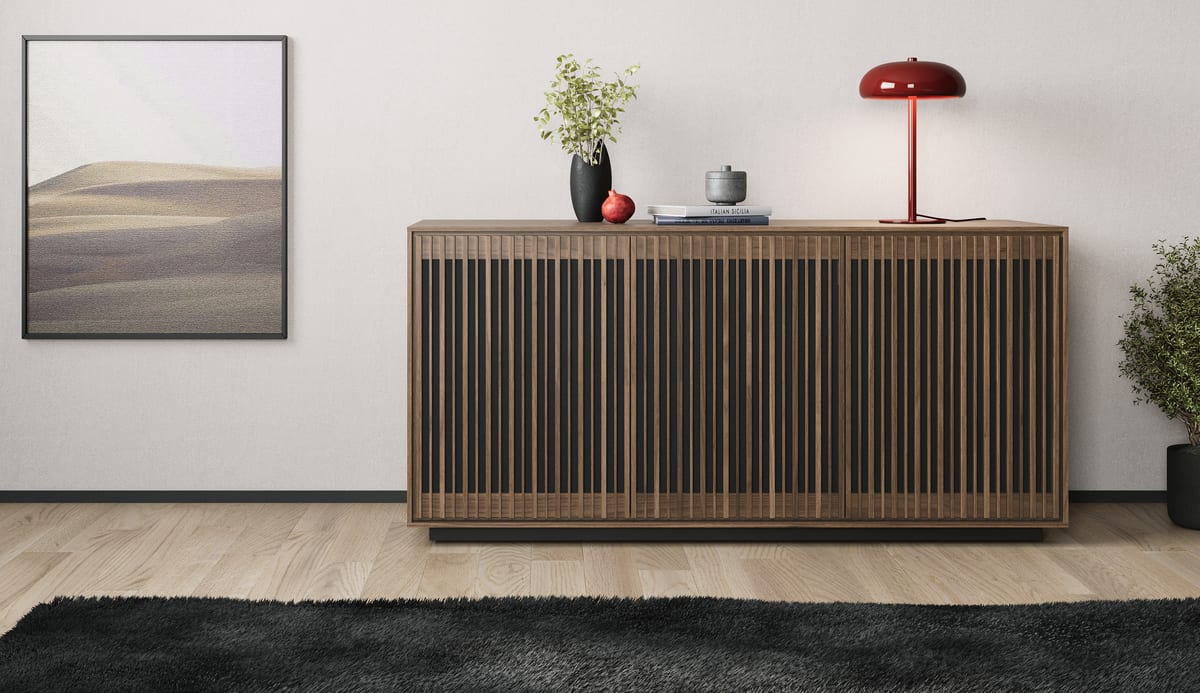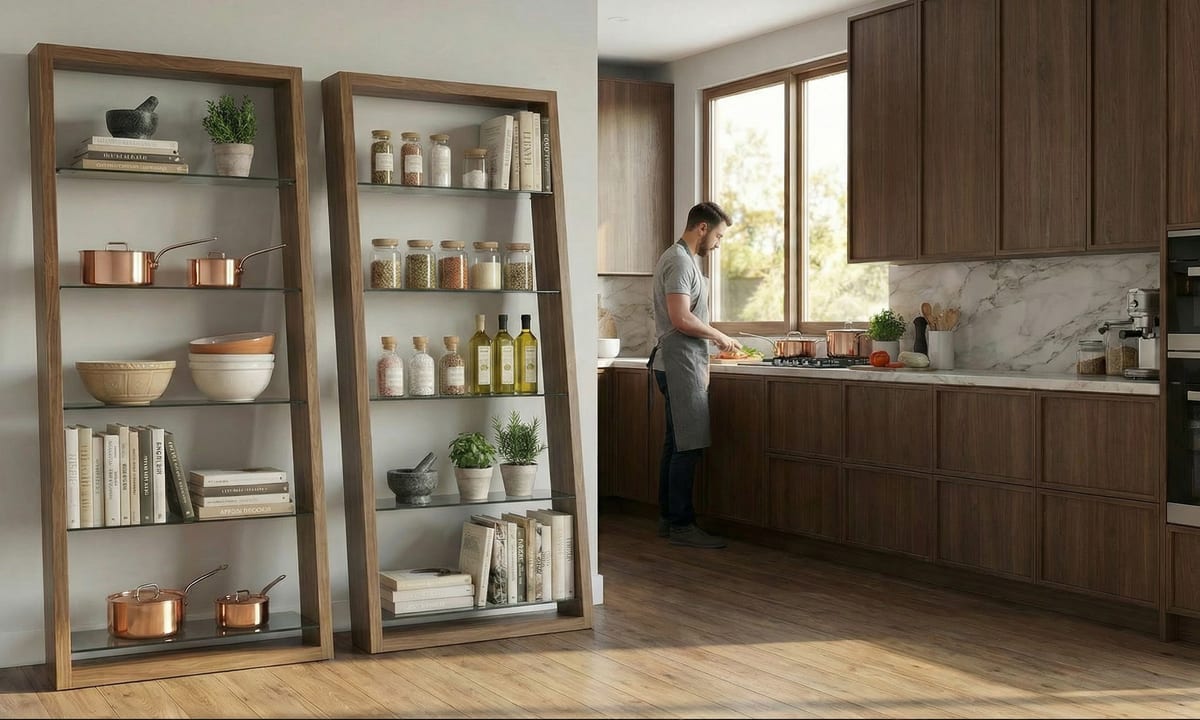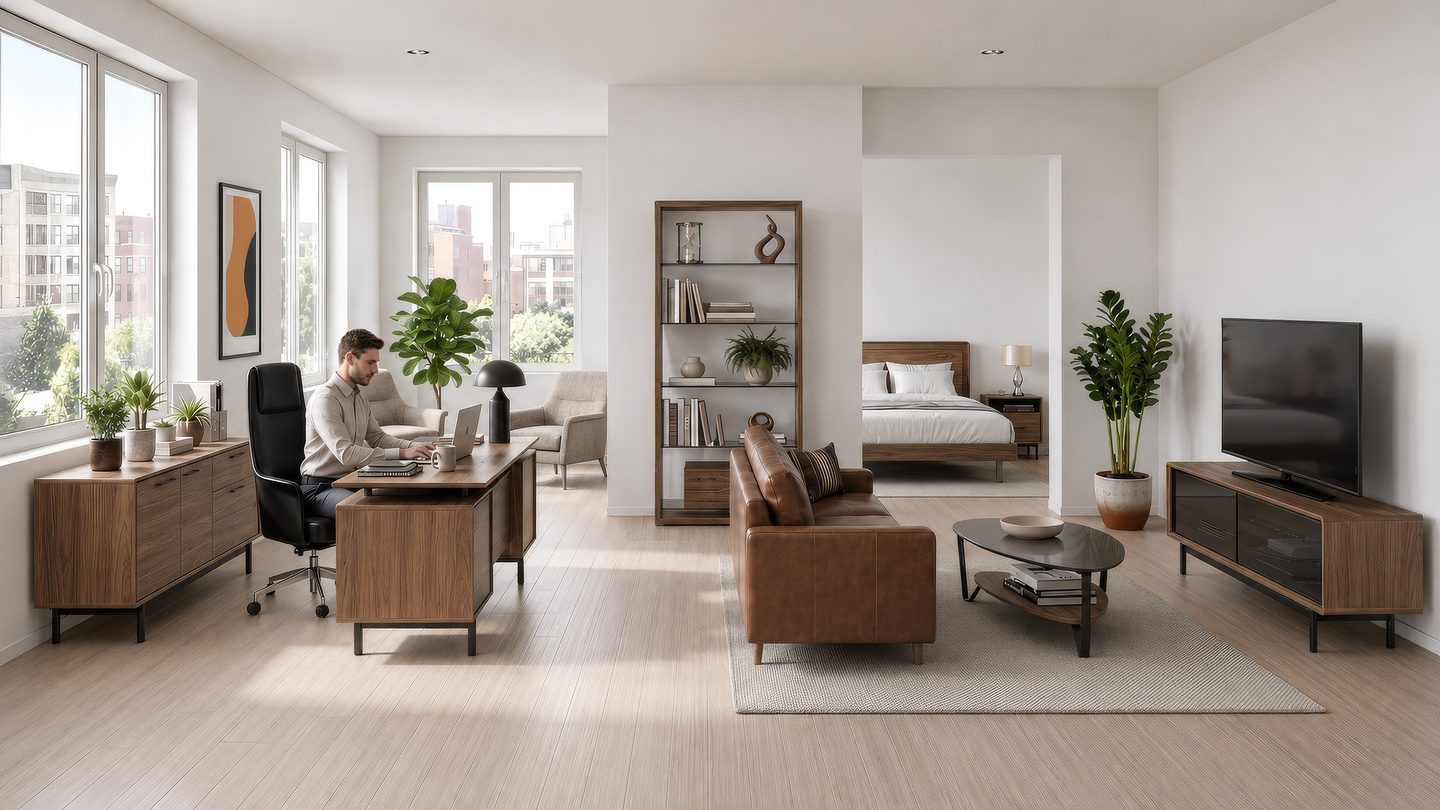
At BDI, Natural Walnut appears across more collections than any other finish—not by chance or trend, but because it consistently performs in real environments over time.

Material selection starts with how something will live, not just how it looks. If a finish carries across our media, storage, office, and bedroom collections, it has proven its value visually, structurally, and technically. Natural Walnut continues to earn that role because it brings balance to the environments it lives in.

Its tone is warm without feeling heavy, and its grain adds movement without distraction. It absorbs light rather than reflecting it sharply, reducing glare around glass, steel, and screens. In technology-driven spaces, restraint matters—walnut softens what could otherwise feel sharp or overly reflective without muting the overall design.

At BDI, Natural Walnut is not a surface treatment. It is a material we engineer around—chosen for how it behaves, how it feels, and how it supports daily use over time.
Key Takeaways: Why Natural Walnut Endures

Natural Walnut combines warmth, durability, and versatility, making it a finish that continues to feel relevant as interiors evolve.

  1. Natural Walnut brings warmth without visual heaviness. Its balanced tone and varied grain add depth and movement while helping soften the appearance of screens, glass, and metal.
  2. Real wood variation is part of its character. Differences in grain pattern and tone make each piece distinctive while careful veneer selection and finishing maintain a cohesive appearance.
  3. Walnut works across a wide range of interiors. Its ability to bridge warm and cool palettes makes it a natural fit for media, office, bedroom, and storage spaces.
  4. The material evolves naturally over time. Exposure to light can gradually lighten the wood and develop a richer, more even patina rather than simply showing wear.
  5. Thoughtful placement and simple care support longevity. Limiting prolonged direct sunlight, maintaining stable indoor humidity, and cleaning with a soft cloth help preserve the finish.
  6. Natural Walnut is designed to outlast changing trends. Its durability, structural reliability, and adaptable appearance allow it to remain at home in a space as surrounding colors and materials change.
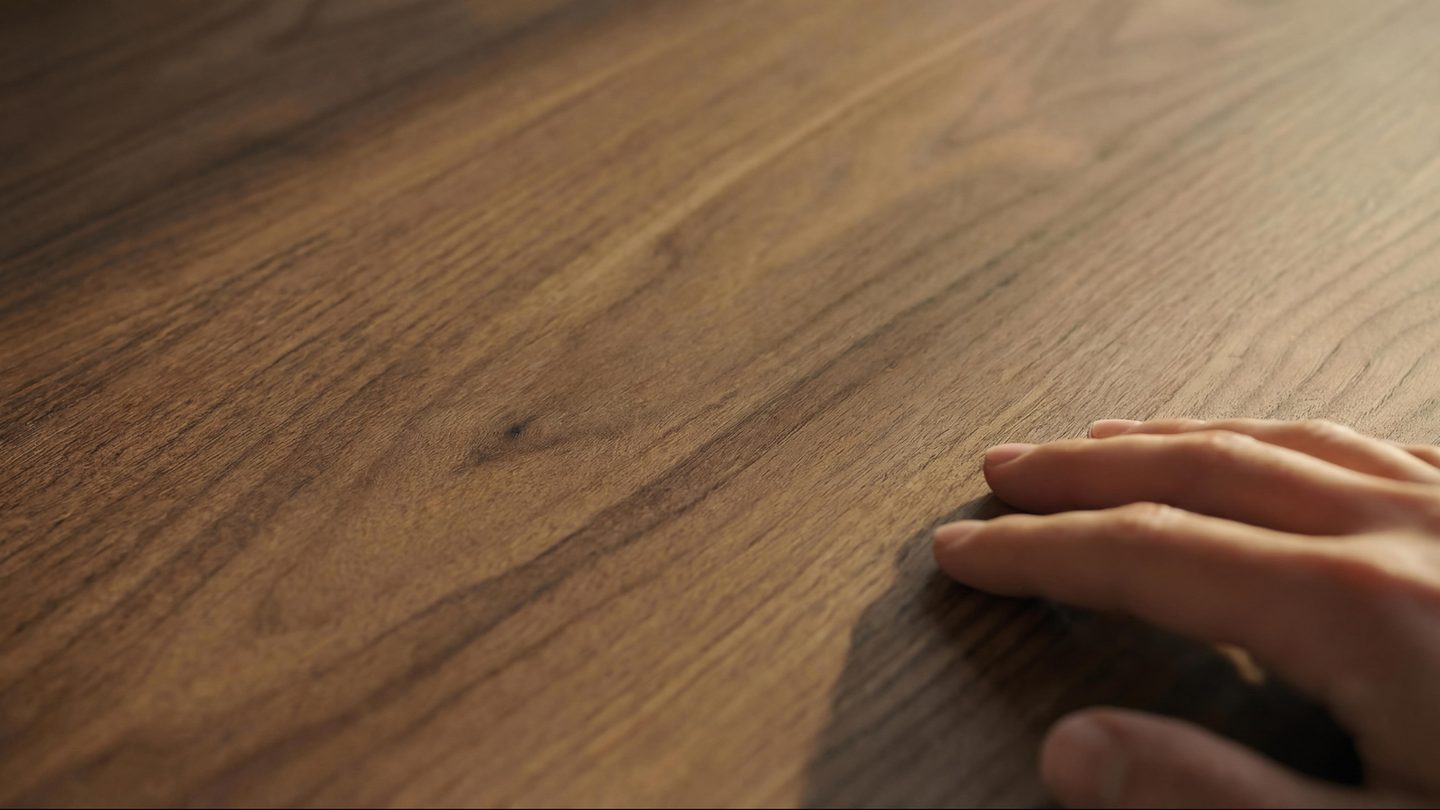
Close-up of a hand resting on a natural walnut wood surface, highlighting the grain and warm tones.
“When we work with walnut, we’re not just selecting a finish—we’re selecting how a piece will behave over time. The most consistent, visually balanced veneer cuts are reserved for the most visible surfaces, while less-exposed areas allow for more natural variation. That balance is what keeps the piece feeling intentional from every angle.”

— Jeff Bare, BDI Product Development Manager
The Character of Natural Walnut


We continue to specify walnut because we understand how it behaves. Its grain is typically straight and fine, yet inherently varied, with patterns that range from long, flowing lines to more pronounced cathedral shapes. Within a single panel, tonal shifts can range from lighter brown to deeper chocolate, adding depth across wide surfaces without creating visual noise.

Walnut offers a practical balance between durability and workability. It is dense enough to feel grounded and substantial under hand, yet responsive enough to allow tight tolerances and refined construction. Edges remain crisp, and surfaces feel solid—not hollow or synthetic. 

Part of what makes walnut dependable is how it responds to light. Rather than reflecting it harshly, it absorbs and softens it. Over the course of a day, its tone shifts subtly—appearing lighter in the morning and deeper in the evening—adding depth without distraction.

Like all hardwoods, it is a living material. In most interiors, walnut will gradually lighten as it oxidizes and is exposed to natural light. The most noticeable shift occurs early, before settling into a warmer, more even tone—an evolution that is expected and accounted for in how we design and finish each piece.

Because the material evolves, placement and care matter. Sustained direct sunlight can accelerate fading and create uneven coloration if objects remain stationary, so we recommend limiting prolonged UV exposure and occasionally repositioning items. Seasonal humidity changes can also cause minor expansion and contraction. Our construction methods accommodate that movement, but a stable indoor environment helps preserve long-term alignment and finish integrity.

Care is straightforward: dust with a soft cloth, clean with a lightly damp cloth when necessary, and dry immediately. Avoid harsh chemicals or abrasives. With proper care, walnut develops a patina that adds richness rather than showing wear.

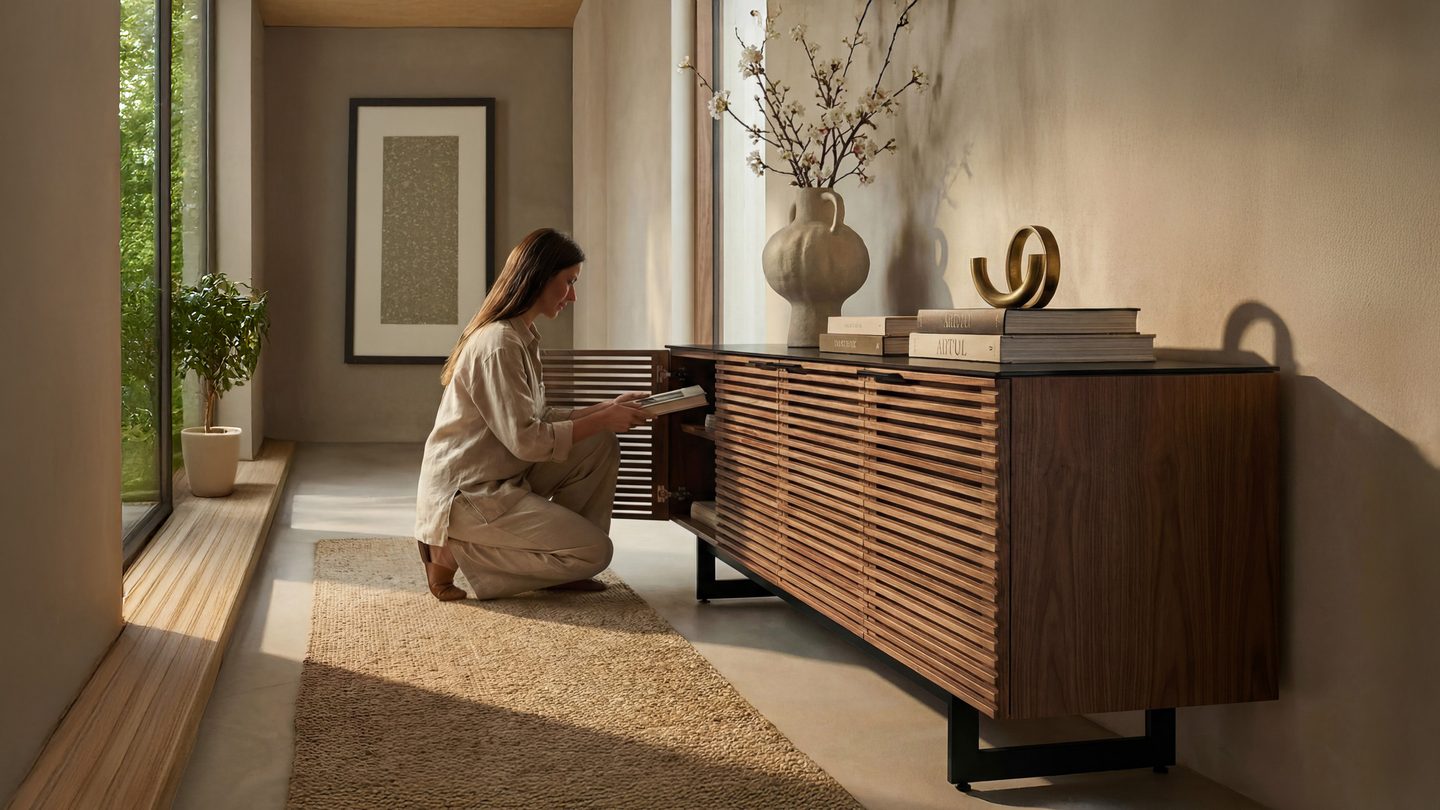
Person kneeling beside a BDI storage cabinet in Natural Walnut, opening a slatted / louvered door in a warm, modern living space.
Designing with Walnut


As living spaces become more connected, materials take on greater responsibility. Open spaces often share the same visual field, and without a clear material strategy, they can begin to feel fragmented.

In these environments, materials must do more than look good individually—they must work together. Walnut plays that role. It balances the visual weight of screens, glass, and metal, without competing for attention. Its grain introduces enough movement to keep large surfaces from feeling flat, while its tone naturally bridges warm and cool palettes.

This is why designers return to walnut repeatedly. It acts as a visual anchor—creating continuity without requiring uniformity. A space can evolve, expand, and layer over time without needing to match pieces exactly.

Variation is inherent to real wood. Grain patterns shift, and tone spans a natural range across boards and production runs. Rather than resisting that, we use it intentionally—allowing each piece to feel individual while maintaining overall harmony through controlled selection and finishing.

"Natural walnut has always been a favorite among both my design clients and myself. It pairs effortlessly with a wide range of design styles and finishes!"

— Gina D'Amore Bauerle, Interior Designer

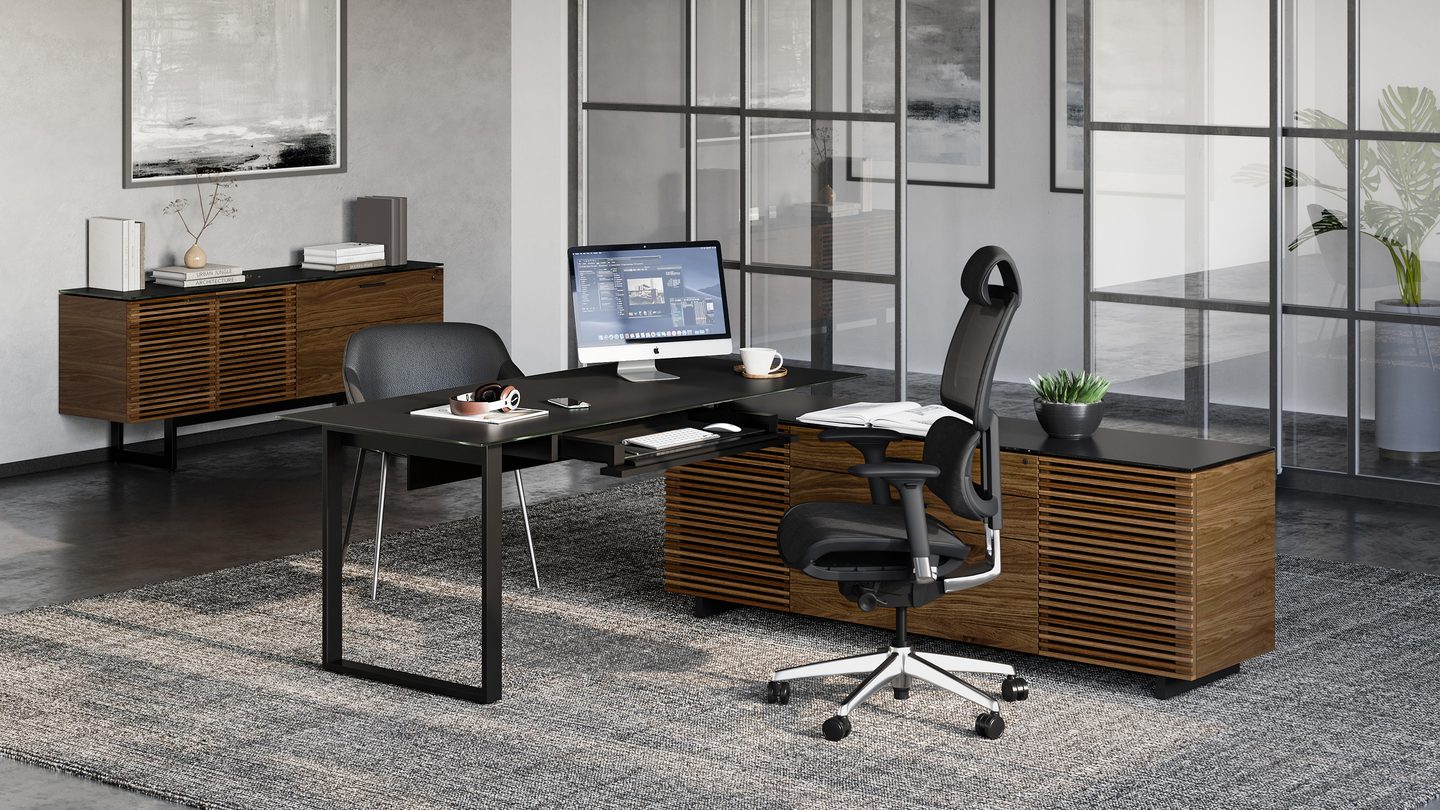
BDI Corridor L-shaped desk with matching natural walnut storage credenza in a modern office setting.
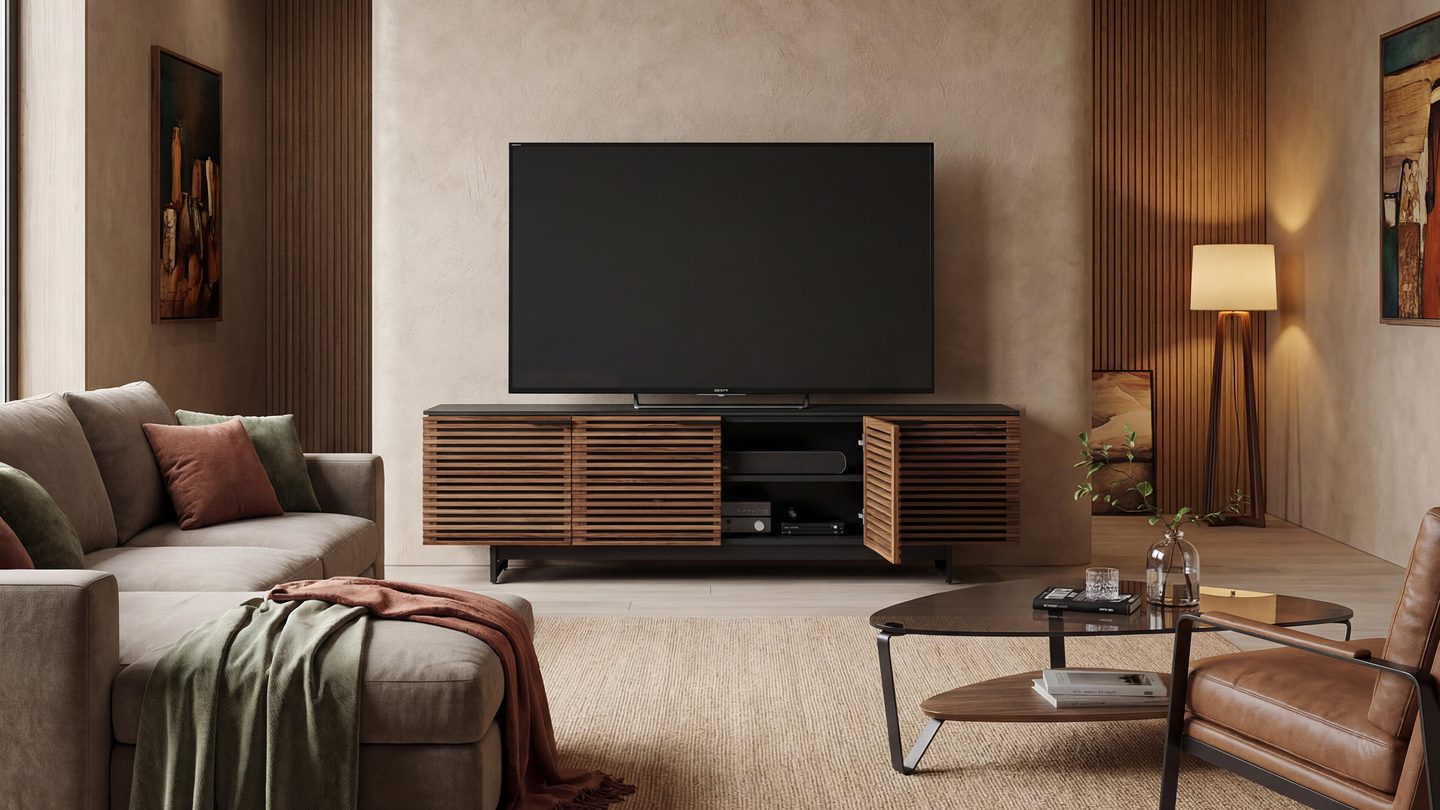
BDI Corridor 8179 media cabinet in natural walnut with louvered doors opened to reveal AV storage, styled with a Dino coffee table in a warm, contemporary space.
Longevity by Design


Designing for longevity means thinking beyond how something looks on day one. Materials need to hold up under changing light, daily use, and evolving interiors.

Walnut remains relevant because it doesn’t lock a space into a single moment. It sits in a balanced tonal range that allows surrounding materials and palettes to change without forcing replacement. As trends shift—from minimal to layered, from high contrast to muted—it continues to feel appropriate.

Its grain prevents large surfaces from feeling static, and as the material matures, it develops depth rather than showing wear. Walnut doesn’t simply endure—it improves.

When properly engineered and finished, it maintains structural integrity while evolving visually. Doors remain aligned, surfaces retain clarity, and the material settles rather than degrades. For those designing spaces meant to last, that reliability matters.

Being Intentional


Choosing a finish is a long-term decision. Materials either require adjustment over time or continue to support a space as it evolves.

At BDI, Natural Walnut continues to earn its place because it performs across all of those conditions—visually balanced, structurally reliable, and engineered to mature with integrity. It brings cohesion across media, office, bedroom, and storage environments without locking a space into a specific moment.

It is not just a finish that works today, but one that continues to make sense over time.

Inspiration in your inbox.

Sign up for our newsletter to be the first to know about new product launches, special sales, design inspiration, blogs, and exclusive giveaways.